Warning Signs of Oral Teeth Infections You Should Never Ignore
Your oral health is the gateway to your general well-being.…
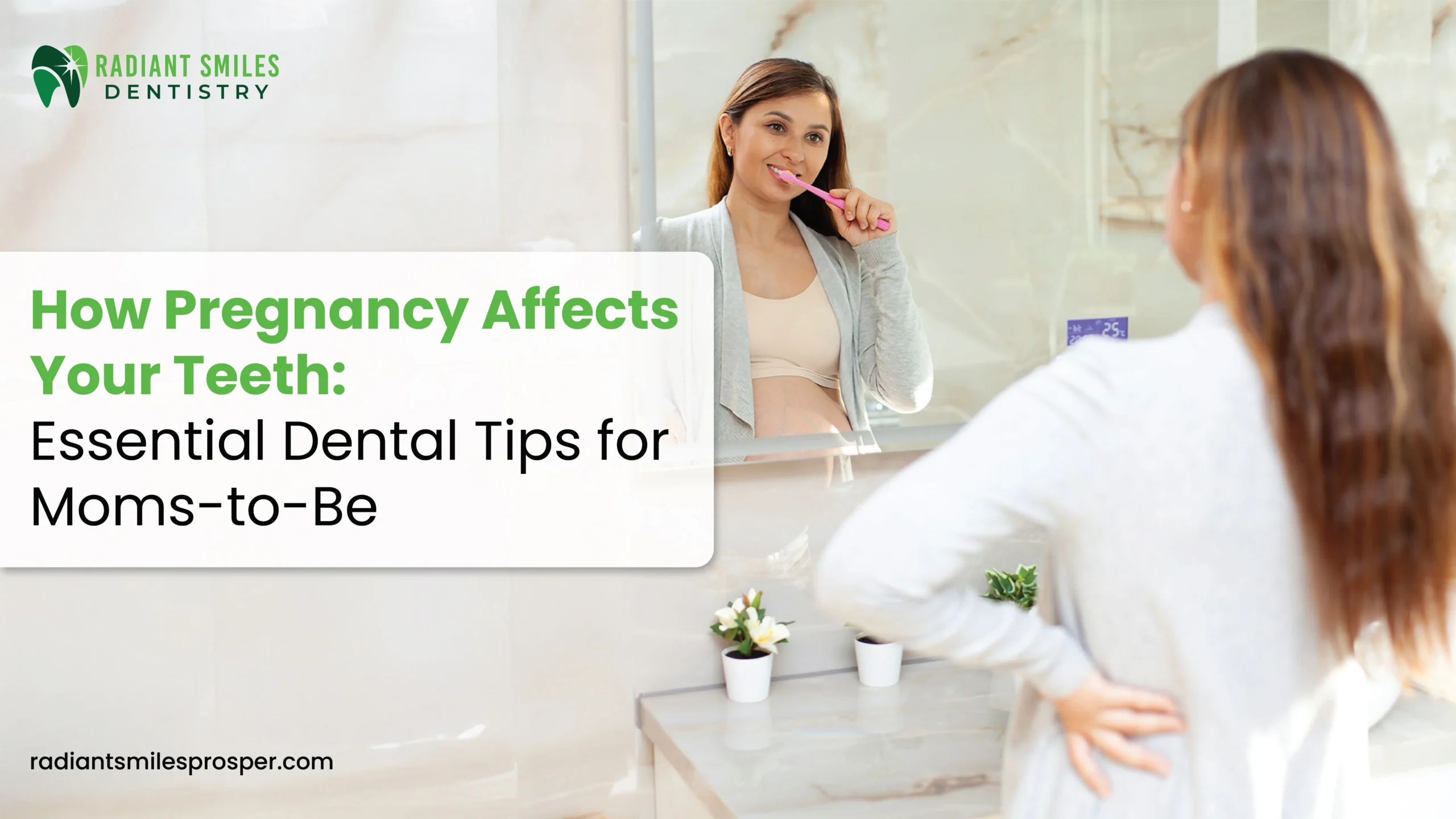
Picture yourself at the dentist, still thinking about your baby’s heartbeat from a recent ultrasound. You might feel excited, happy, and maybe a little concerned about your health. With so much to prepare for your new baby, it’s easy to forget about your oral health. Many expectant mothers don’t realize that hormonal changes can affect their mouths, making dental care during pregnancy especially important.
At Radiant Smiles in Prosper, TX, we want you to feel confident as you become a mother, not worried about dental problems. Taking care of your teeth is an important part of prenatal care and helps protect both you and your baby.
Hormones, especially higher levels of progesterone and estrogen, are the main reason oral health changes during pregnancy. These hormones make your gums more sensitive and change how your body reacts to plaque, even if you keep up your usual dental routine.
Unfortunately, many pregnant women postpone necessary dental visits due to misconceptions about safety. Current stats highlight this gap: The 2025 State of America’s Oral Health and Wellness Report from Delta Dental reveals that only half of pregnant respondents view dental care as vital to prenatal health. Just 54% see dental visits during pregnancy as important as annual physicals, and only 26% know that gum disease can lead to complications like preterm birth and low birth weight.
This lack of attention to dental health can contribute to serious health issues, such as preterm birth or low birth weight, potentially affecting both the mother and the baby. Understanding this shift is the first step toward safeguarding your pregnancy’s oral health.
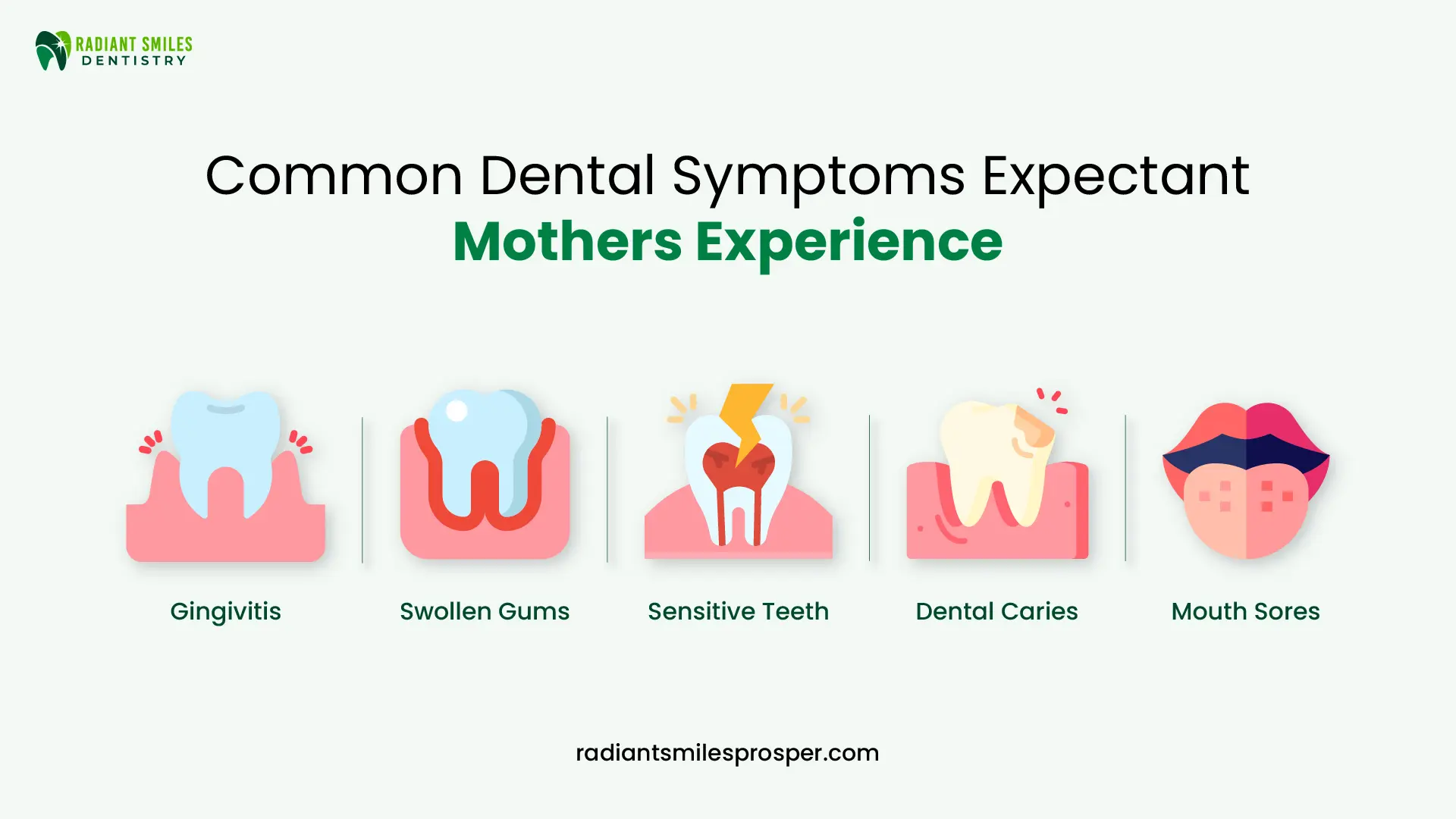
Hormones, along with changes in your diet or dental habits, can cause several common and sometimes uncomfortable oral symptoms:
This is the most common dental problem during pregnancy. Higher progesterone levels increase blood flow to your gums, making them more sensitive and likely to react to plaque. Your gums may look red, swollen, or feel tender, and they might bleed easily when you brush or floss. If not treated, this can get worse and may need special care.
Gingivitis often starts with mild redness and tenderness (Stage 1), then moves to more swelling and frequent bleeding (Stage 2), and finally, very swollen gums with constant bleeding (Stage 3). Knowing these stages helps you spot problems early and get care before they become serious.
Your gums might look redder, puffier, or more swollen than usual while you are pregnant.
Many women find their teeth are more sensitive to hot or cold foods and drinks. Morning sickness can make this worse because stomach acid can weaken tooth enamel.
Snacking often, craving carbs, and the acid from morning sickness all raise the risk of tooth decay during pregnancy.
Some women get small, harmless growths on their gums called “pregnancy tumors” or pyogenic granulomas. These look like red, swollen lumps that may bleed easily, and usually go away after the baby is born.
Some discomfort is normal during pregnancy, but severe or ongoing tooth pain is not and should be checked by a dentist. Dental pain can be a sign of a serious problem.
The causes of dental pain while pregnant are typically rooted in:
If you have sudden or sharp dental pain during pregnancy, see a dentist right away. Ignoring a toothache can lead to an infection that puts both you and your baby at risk.
The American College of Obstetricians and Gynecologists (ACOG) confirms that receiving necessary dental care during pregnancy is safe and highly recommended.
Elective/Cosmetic Procedures: Wait until after your baby is born for treatments like whitening or veneers. Most X-rays are safe with proper shielding, but they are usually delayed unless needed for an emergency, like diagnosing a painful infection.
The second trimester is usually the safest time for non-urgent dental work. Morning sickness often eases by then, and it’s easier to lie on your back. Emergency treatment for gum disease or pain can be done at any time during pregnancy.
Good oral hygiene is the best way to prevent dental problems during pregnancy.
You can schedule a dental visit as early as week 6 of pregnancy. Even if you don’t have any pain, a regular checkup helps you stay ahead of hormonal changes.
If you need a routine cleaning or advice about dental care during pregnancy, Radiant Smiles in Prosper, TX, is here to help. Don’t wait for a toothache; let us keep you comfortable and safe throughout your pregnancy.
Your oral health is closely linked to your overall health during pregnancy. By taking care of your teeth and gums, you can avoid discomfort from issues like swollen gums or sensitive teeth and help ensure a healthy pregnancy.
Don’t let dental concerns take away from the excitement of expecting your baby. If you need dental care in Prosper, TX, the team at Radiant Smiles is ready to help.
Call us at (469) 425-8555 or visit our website to book your prenatal check-up and talk about your dental health plan. If you call before Friday, you can get a same-week appointment. We’re here to keep your smile healthy for you and your family.
Yes, absolutely. Dental cleaning near me and routine exams are not only safe but highly recommended throughout pregnancy. They are crucial for preventing and managing pregnancy gingivitis, which affects 60-75% of expectant mothers.
The second trimester is generally considered the safest and most comfortable time for non-emergency restorative treatments, such as fillings. However, necessary procedures like treating an abscess or severe tooth pain during pregnancy should be done immediately, regardless of the trimester.
While pregnancy does not directly cause calcium loss from your teeth, severe, untreated periodontal disease (often starting as gum inflammation during pregnancy) can erode the bone supporting your teeth, leading to loose teeth. This is why regular dental care during pregnancy is so important.
Yes, there is a connection. Studies have associated severe periodontal disease in pregnant women with an increased risk of adverse pregnancy outcomes, including preterm birth and low birth weight. Furthermore, a high level of decay-causing bacteria in the mother’s mouth can be transmitted to the baby, predisposing the child to early childhood caries.
Diagnostic X-rays needed for an emergency, such as a severe toothache while pregnant, are safe when using lead shields to cover the abdomen and neck. However, elective X-rays are usually postponed until after delivery. Always inform your dentist that you are pregnant.
Your oral health is the gateway to your general well-being.…
Most people schedule dental checkups to deal with cavities, clean…
Have you ever looked in the mirror and noticed that…
https://qualifications.jtec.gov.jm/listings/
https://educate.gov.jm/events-grid/
https://qualifications.jtec.gov.jm/about/
https://acessoainformacao.ufop.br/participacao-social/
https://healthfirstpharmacy.com/pediatric/
https://nagarpurmohilacollege.edu.bd/public-exam-results/
https://www.reparaturnetz.eu/agbs/
https://masiljoperu.com/product-category/proteccion-lumbar/
https://facturacion.funticket.mx/
https://www.dhvani.ai.in/services/
https://laboratoriosdemexico.com.mx/618-profesional/
https://healthfirstpharmacy.com/contact/
https://healthfirstpharmacy.com/about/
https://unicbarbershopp.comunicacaovirtual.com.br/
https://pep.moey.gov.jm/account/